Loading...
True Line Edgewater Concrete is a concrete contractor serving South Daytona, FL with driveways, patios, sidewalks, pool decks, and slab work on the city's stock of postwar CBS ranch homes. We have worked throughout Volusia County since 2019 and understand the sandy sub-base conditions, Halifax River moisture, and City of South Daytona permit requirements that shape every concrete job in this part of the county.
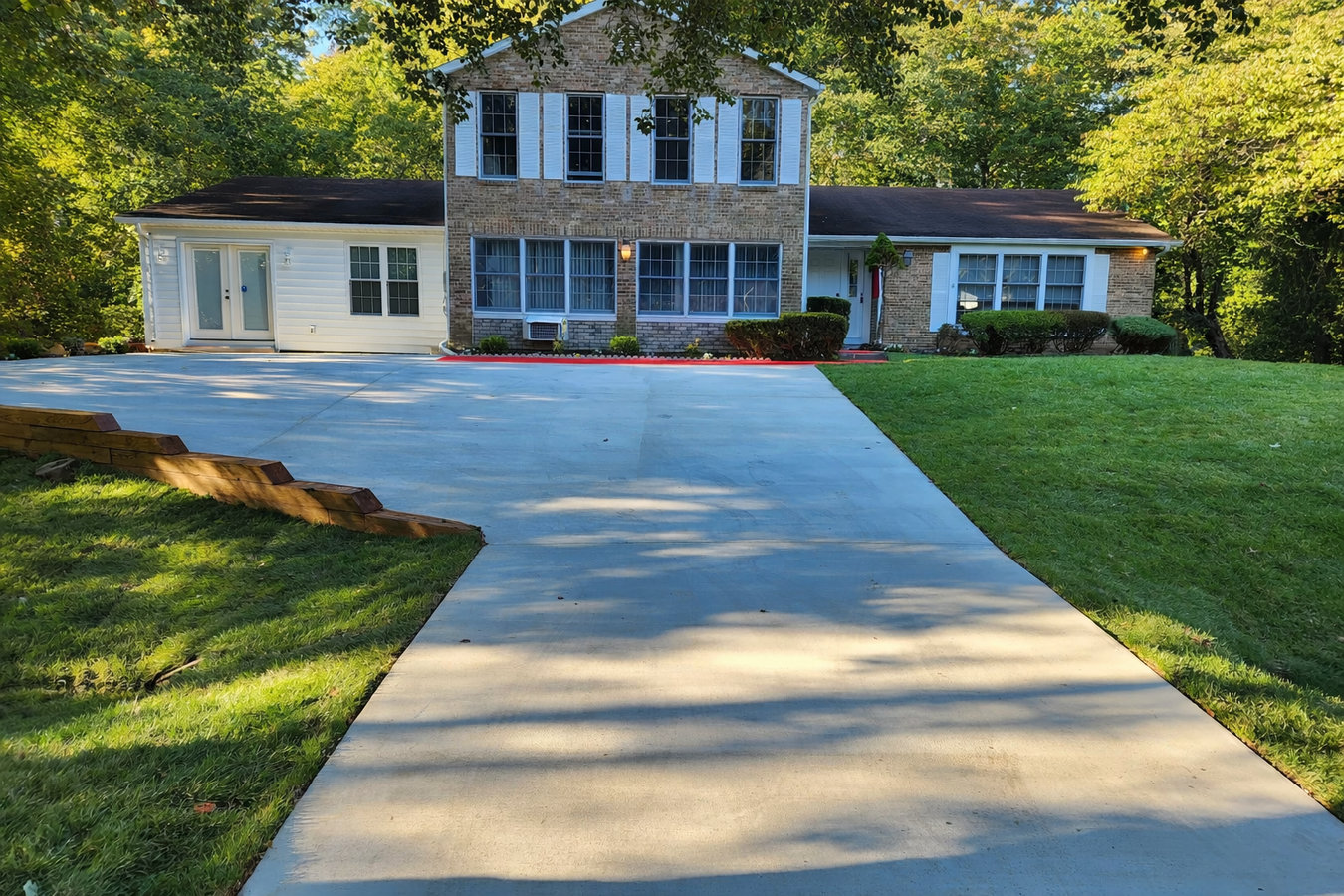
Most driveways in South Daytona were poured alongside the homes they serve in the 1950s through the 1980s - at that age, original slabs have typically cracked, settled, and developed surface spalling that patching cannot address. Mature oak trees on many residential lots lift and fracture slabs from below, and the sandy soil shifts under load after heavy summer rain. Our concrete driveway building service includes proper base preparation for sandy coastal sub-bases and grading for the drainage slope that South Daytona's frequent afternoon thunderstorms require.
South Daytona's year-round warmth and long outdoor season mean a backyard patio sees real use here, not just a few weekends a year. Concrete handles the humidity coming off the Halifax River, the near-daily summer rain, and the intense UV exposure that causes wood and composite decking to deteriorate noticeably faster in this climate. A properly sloped and sealed patio slab is the lowest-maintenance outdoor surface available for a South Daytona home.
Walkways on South Daytona's older residential streets deal with two problems that newer Florida suburbs do not: the sandy sub-base shifts seasonally as it wets and dries, and mature oak root systems push concrete sections up from below over time. Replacement sidewalks on these lots need deep, compacted bases and control joints placed to give the concrete a controlled path if movement happens - that planning prevents the same failure from recurring in the new slab.
South Daytona's climate keeps pools in use for the better part of the year, and the pool deck absorbs daily foot traffic, pool chemical splash, and the moisture that stays in the air near the Halifax River. A broom-finished or lightly textured concrete deck is the most durable option for this environment - it does not develop the color fade, surface delamination, or tile cracking that other deck materials develop under South Daytona's combination of heat, moisture, and chemical exposure.
Low-lying yards near the Halifax River in South Daytona are prone to soil erosion and grade loss after heavy rain events - the sandy soil moves easily when saturated, and flat lots have nowhere for water to go quickly. A concrete retaining wall with properly placed drainage weep holes stabilizes grade and prevents the slow erosion that leads to sunken patios, uneven walkways, and soil loss along property edges over time.
Entry steps on South Daytona's older CBS ranch homes are often original to the home and show the same soil-movement cracking and surface spalling as aging driveways and walkways. Concrete steps are the practical replacement choice here - they handle the humidity, the storm runoff, and the sub-base movement that causes other materials to shift and become a trip hazard over time.
South Daytona is a compact city of about 13,000 people sitting on roughly three square miles between Daytona Beach to the north and Port Orange to the south. The Halifax River forms the western boundary, and the city's flat, low-elevation terrain means drainage is never a minor consideration on a concrete job here. Most of the city's housing was built between the 1950s and the 1980s using concrete block construction - the standard Florida method for that era. Those homes are now 40 to 70 years old, and the concrete flatwork around them has typically gone through multiple Florida storm seasons without replacement. Driveways crack from the sandy sub-base shifting under load. Sidewalks get lifted by mature oak tree roots. Patios spall from decades of UV exposure and chemical contact near pools. The original slabs were poured to the standards of their day, which predate current drainage and base preparation practices.
Two conditions specific to South Daytona compound those structural issues. First, the sandy coastal soil that underlies most of the city compresses unevenly under vehicle load and saturates quickly during storm events, then dries out and contracts - that wet-dry cycle is one of the primary drivers of concrete cracking in this part of Volusia County. Properties closer to the Halifax River have a water table that sits higher year-round, which means sub-base moisture does not go away between storms. Second, South Daytona's summer thunderstorm pattern, with heavy rain arriving almost daily from June through September, puts consistent stress on any concrete surface that was not properly graded for drainage. Standing water adjacent to a slab accelerates sub-base movement and is one of the fastest ways to shorten the life of a concrete installation. Contractors who understand these two conditions and account for them in their base prep and drainage design produce results that last significantly longer than those who do not.
Our crew works throughout South Daytona regularly, and we pull permits through the City of South Daytona for work within city limits. We know what the city's building inspection process looks like for standard residential flatwork and have worked on the full range of properties here - from the ranch homes closest to the Halifax River on the west side of US-1 to the slightly more inland neighborhoods further east toward Ridgewood Avenue.
US-1 runs straight through the middle of South Daytona and is the main north-south artery connecting the city to Daytona Beach to the north and Port Orange to the south. Most of the city's residential neighborhoods sit close to this corridor, on small lots with mature trees that have had decades to grow into and under the concrete around them. The Halifax River waterfront to the west - a tidal lagoon that is part of the broader Intracoastal Waterway system - adds moisture and mild salt air exposure to properties on the western side of the city, which affects sealer choice and maintenance intervals on concrete surfaces there.
We also serve Daytona Beach to the north and Port Orange to the south, so if your project spans a city line or a neighbor asks, we cover the full stretch of the Halifax River corridor in this part of Volusia County.
Reach us by phone or the contact form and describe what you need - a driveway, patio, sidewalk, or another concrete project. We respond to all South Daytona inquiries within one business day and ask the right questions upfront so we do not waste your time.
We visit the property, assess the sub-base condition, check for root damage or drainage issues, and measure the area. You get a written estimate that covers the full scope - no vague ranges that balloon after the pour starts.
We handle the City of South Daytona permit application and give you a start date once approval comes through. Standard residential flatwork permits typically process within a few business days. You will not need to manage the city building office - that is our job.
We complete the pour, finish to the spec we agreed on, and leave the property clean. We walk you through the curing timeline - concrete needs seven days before vehicle traffic - and tell you exactly when the surface is ready to use.
We serve all of South Daytona - from Halifax River-adjacent streets to the neighborhoods along US-1 and Ridgewood Avenue. One call gets you a written estimate with no pressure and no obligation.
(386) 749-1231South Daytona is a small city of about 13,000 residents covering roughly three square miles in central Volusia County. It sits between Daytona Beach to the north and Port Orange to the south, with the Halifax River - a tidal lagoon connected to the Intracoastal Waterway - running along its western boundary. Despite its compact size, South Daytona is its own incorporated municipality with a city hall, building department, and local services separate from the larger cities that border it. US-1 (Ridgewood Avenue) runs through the center of the city and is the commercial spine that most residents orient their daily lives around. For background on the city's geography and demographics, see South Daytona, Florida on Wikipedia.
The city's housing stock is made up almost entirely of single-story ranch homes built between the 1950s and the 1980s - the same concrete block construction that defines most of coastal Volusia County from this era. Small lots, mature oak and palm trees, and modest square footage are the norm. About 60 percent of homes are owner-occupied, with the remainder rented, which means the concrete work here ranges from owner investments in long-term upgrades to practical repair jobs for landlords managing older rental properties. Nearby cities like Port Orange to the south have a similar housing stock but newer sections developed in the 1990s and 2000s - South Daytona's residential character is more uniformly postwar, which means the flatwork needs here are almost entirely driven by aging original slabs rather than new construction concrete.
Transform your backyard with a beautiful, solid concrete patio.
Learn MoreSmooth, level concrete floors installed for homes and businesses.
Learn MoreSolid, code-compliant steps built for any entry or elevation change.
Learn MoreCall us or submit a free estimate request today. We serve all of South Daytona and respond within one business day - describe your project and we will take it from there.